
Rocky Mount Resident Lookup Records
A careful Rocky Mount resident lookup uses records as separate pieces of evidence. Rocky Mount spans Nash and Edgecombe counties, so the city name alone does not identify the right tax office, deed custodian, clerk, or polling record. Establish the county with an address, parcel, or case clue first. Then keep the source role clear: a deed party is not automatically an occupant, and a voter registration is not proof that a person remained at an address after the record date.
Official sources also have different access paths. A web index may be enough to locate a record, while a clerk terminal, county office, or written request is needed for a fuller document. The table separates those routes so a name search does not become an unsupported claim about one person.
| Record | What It Can Confirm | Rocky Mount Route | Access |
|---|---|---|---|
| Parcel and tax roll | Assessed owner, property address, mailing address, parcel or deed lead | Nash Tax Search or Edgecombe Parcel Search | Online current-data search; contact the tax office for corrections |
| Voter registration | Registered name, public address, status, precinct, districts, and history context | NCSBE Voter Search | Free lookup; protected identifiers stay confidential |
| Court case | Party role, case number, events, and disposition | North Carolina eCourts Portal | Free public case information; clerk terminal or file for fuller records |
| Vital event | Event date, place, or relationship fact | North Carolina Vital Records or event-county Register of Deeds | Index and uncertified routes differ from certified-copy rules |
| Printed directory | A historical listed-at address and household context | Braswell Memorial Library and DigitalNC | Library, scan, microfilm, or archive route depending on edition |
Note: Keep the record date and source role beside every result so later searches do not turn an old connection into a current claim.
Rocky Mount Resident Lookup Voters
The state Voter Lookup is a useful first check when a name is not rare. Its form requires first name, last name, and at least one status choice, Registered, Removed, or Denied. Middle initial, year of birth, and county are optional filters. Use Nash or Edgecombe only after confirming which county is relevant. The result supplies registration context, not a complete household list or a promise of current residence.
| Search field | How it narrows a name |
|---|---|
| First and last name | Required starting fields for the state lookup. |
| Middle initial | Optional disambiguator for same-name candidates. |
| Year of birth | Optional year filter; the public result does not display full birth date. |
| County | Optional filter for Nash or Edgecombe after the county is known. |
| Status | At least one required choice: Registered, Removed, or Denied. |
The public fields can include name, address, party, precinct or districts, status, and voting-history context. Full or partial Social Security numbers, full dates of birth, driver-license information, email, photographs, ID copies, and similar fields are protected by G.S. 163-82.10. Voter files update on a schedule and election geography changes, including 2026 Nash polling-place changes, make the lookup date important.
Rocky Mount Resident Lookup Courts
The North Carolina eCourts Portal provides the statewide starting point for public case information. North Carolina completed eCourts conversion in all 100 counties on October 13, 2025, so an older county-specific search link may no longer be the current route. Smart Search can be approached by case number, party, citation, attorney, business, or hearing. When a surname needs a wildcard, the official guidance calls for at least three last-name letters plus a wildcard and at least one first-name character plus an asterisk.
A case result can show a case summary, assignment, parties, cause of action, events, hearings, and disposition. Capture the case number and disposition together. An allegation is not a finding, and a name match is not identity proof. For documents, a certified record, or a formal county criminal search, use the clerk route. Judicial Branch court-records guidance says clerk terminals can search criminal matters by defendant name, case number, or victim or witness name, while paper files remain with the clerk in the county that holds the case.
The Federal Bureau of Prisons locator is shown in this reference image as a separate federal search route.
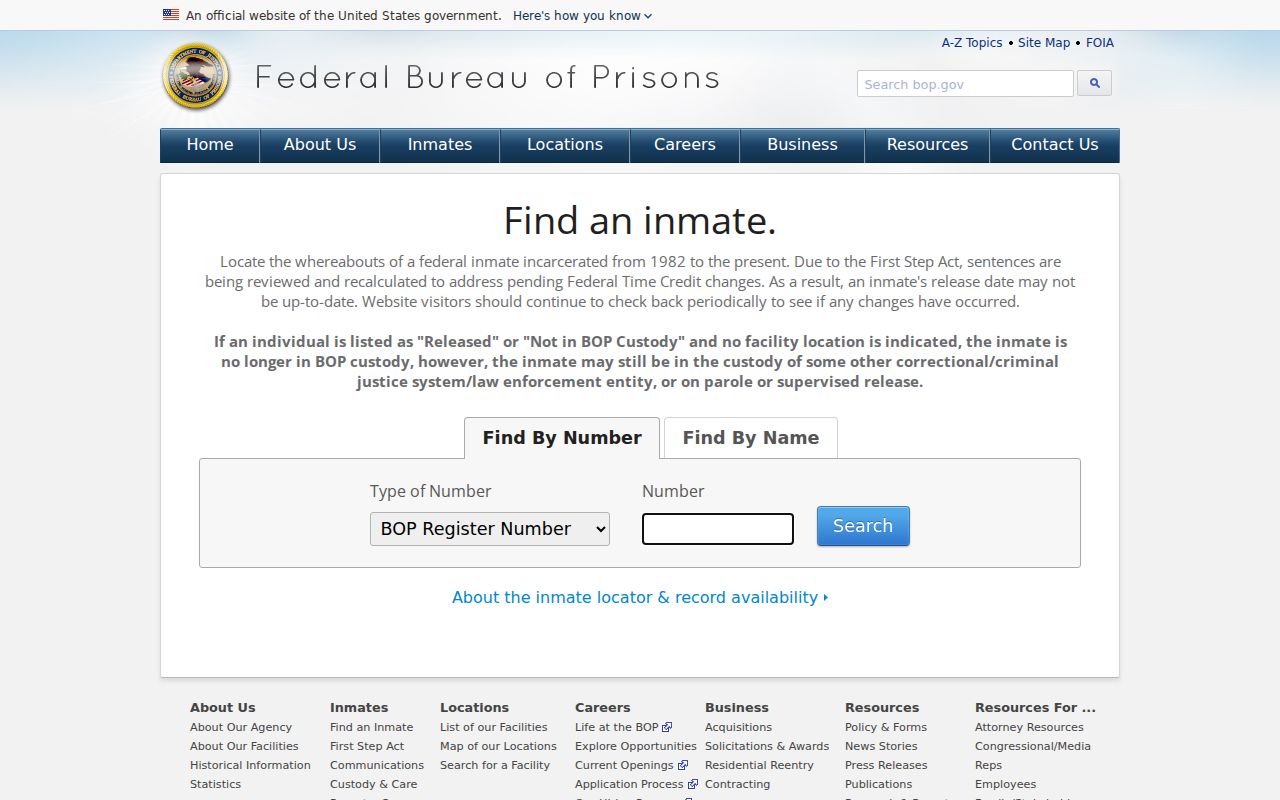
For federal matters, PACER and the Eastern District of North Carolina have their own access and fee rules. The state Department of Adult Correction search covers state prison, probation, and parole, not county-jail-only custody. Those scope limits matter more than a blank result.
Note: A court address can be a party, incident, mailing, business, or property address, so label the role before treating it as location evidence.
Resolve Rocky Mount Resident Names
Use two independent identifiers before joining records for a common name. A middle initial and county may be enough for one search, but a stronger pair is a name plus an address, a spouse or parent, an approximate age or year, an occupation printed in a historical directory, or a parcel reference. Keep candidates separate when the link is not established. The county line creates an extra risk in Rocky Mount because the same postal city can point to different record custodians.
- Run the name in Voter Search with a middle initial, year, county, and status when known.
- Compare a likely address with the Nash or Edgecombe parcel system, keeping owner, owner mailing, and situs address as separate fields.
- Use the deed reference or a court case number to find a dated, source-specific record.
- Check a historical directory only for the edition year, page, and role it actually prints.
- Ask the appropriate custodian for a complete or certified record only when the question and access rule require it.
Negative results also need a label. A missing name can reflect a spelling change, privacy protection, another county, an unindexed image, a removal date, or a source that did not cover the person. It is not proof that the person was never in Rocky Mount.
Verify a Rocky Mount Resident Record
A resident lookup becomes more reliable when each result answers a narrow question. Parcel data can support ownership or a property connection. Voter data can support registration context on its own date. A deed gives a title relationship. A court file supplies the procedural record. Vital sources can establish an event or relationship where the requester is eligible. None should be stretched into proof of continuous residence.
- Anchor the name to one dated public record and note the county.
- Compare it with a second independent source that uses a different record system.
- Preserve the exact role, such as owner of record, registered voter, party, or listed resident.
- Use the custodian for a certified copy or correction when an official decision depends on the document.
- Docket
- A court’s running case record that organizes filings, events, and dates under a case number.
- Index and image
- An index points to a record. An image is the scanned document or page itself, which may have different access.
- Certified copy
- A copy issued and authenticated by the custodian. Eligibility, identification, and fees can apply.
Rocky Mount Resident Lookup Leads
For a birth, death, marriage, or divorce question, start with the county where the event occurred, not only the person’s later Rocky Mount address. North Carolina Vital Records lists state order routes for births from 1913, deaths from 1930, marriages from 1962, and divorces from 1958. Nash and Edgecombe county systems have their own stated historical coverage. Certified copies have relationship and identity limits under G.S. 130A-93, even where an index or uncertified-copy route is available.
Historical directories provide a different kind of clue. Rocky Mount volumes run from 1908 through 1965 in the documented collection landscape. The 1963 directory separates alphabetical, householder and street, business, and telephone departments. That structure helps distinguish a listed person, a household clue, and a business entry. For an older address, the city-directory collections at Rocky Mount’s Directory Book are the better route than guessing from a modern profile.
The North Carolina State Bureau of Investigation registry is represented by this official-search screenshot.
Rocky Mount Resident Lookup Roles
City records can add a narrow, useful connection. The Rocky Mount City Clerk is the custodian for council minutes, ordinances, resolutions, city-property deeds, and easements. Planning and inspection materials can identify an applicant, owner, contractor, permit, or property transaction. Those are roles in a city record, not proof that someone lived at the address. When a record is not online, Rocky Mount uses NextRequest for public-record requests.
The city cemetery office is another event-based route. Burial permits can connect a deceased person, residence or address, plot, authorization, and funeral home, but each field must stay in its documented role. Use a focused request with a known name, date range, and record type rather than asking a custodian to create a person list.
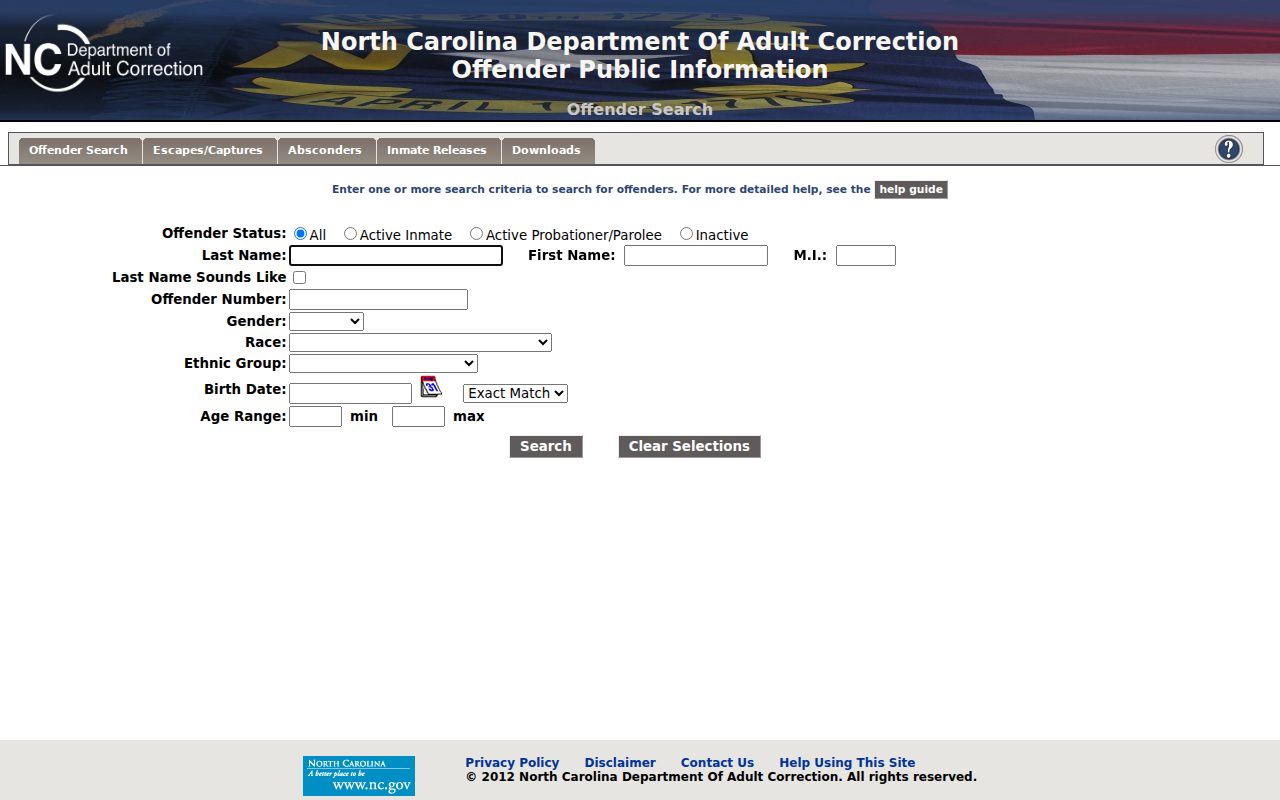
North Carolina Adult Correction Offender Public Information appears in this official-search image.
Note: A precise request names the existing record, custodian, date range, and desired format instead of asking an agency to create a new compilation.
Respect Rocky Mount Lookup Limits
North Carolina’s Public Records Law provides access to existing public records, but it does not erase record-specific limits or require an agency to create a new resident compilation. Under Chapter 132, inspection is generally available at reasonable times and ordinary copy charges are limited as the law provides. Protected voter identifiers, sealed and juvenile court matters, adoption information, medical data, and certain vital fields remain outside a general name search.
The North Carolina Address Confidentiality Program protects the actual address and telephone number of qualifying participants through a substitute address. A substitute or absent address is a legal boundary, not a puzzle to solve. For an error, request correction from the tax office, elections office, clerk, Register of Deeds, or city custodian that maintains the record.
Lawful use. A Rocky Mount resident lookup is for personal, lawful research. Do not use a record trail to stalk, harass, intimidate, repeatedly contact, or harm anyone.